Dimdima
Online Children's Magazine from India
Dimdima
Online Children's Magazine from India




Death of a Cosmonaut
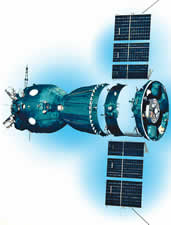
While the Americans were recovering from the shock of losing three astronauts in a fire on 27 January 1967, the Russians who had also set their sights on the moon were trying to catch up with their rivals in the space race. On 23 April, 1967 the Soviet Union launched a new spaceship called SOYUZ. Soyuz was intended to hold three cosmonauts but on its maiden flight, carried only one, Vladimir Komarov.
Soyuz 2, with a crew of three, was to be launched on the following day. The two spacecraft were scheduled to meet in space, and dock. Afterwards two crew members of Soyuz 2 were to transfer to Soyuz 1, and return home with Komarov.
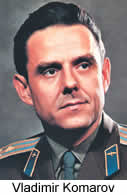 But things didn’t work out that way. Soyuz 2 was never launched, probably because its predecessor developed problems while in orbit. After just over a day in space, Soyuz 1 made an emergency re-entry but the parachutes of the violently spinning spacecraft got entangled, and the spacecraft crashed at high speed in a field near the Russia–Kazakhstan border. Komarov did not survive the crash.
The designers of Soyuz, like those of Apollo before them, learnt from their mistakes and made major modifications in the Soyuz spacecraft. But this took time. When finally in October 1968, the next manned spacecraft of the Soyuz family, Soyuz 3, met up with the unmanned Soyuz 2, in orbit, it did not create much of a stir. Earlier that month, Apollo 7 had spent nearly 11 days in space, and cleared the way for a flight to the moon.
EXPLORE MORE...
Get Help or Give Help.
- Do you have a Science Question?
- Post it here and get the answer.
- Some questions posted by others are not yet answered.
- View those questions and answer them.
Dimdima is the Sanskrit word for ‘drumbeat’. In olden days, victory in battle was heralded by the beat of drums or any important news to be conveyed to the people used to be accompanied with drumbeats.
Bharatiya Vidya Bhavan
K. M Munshi Marg,
Chowpatty, Mumbai - 400 007
email : editor@dimdima.com
Bharatiya Vidya Bhavan
505, Sane Guruji Marg,
Tardeo, Mumbai - 400 034
email : promo@dimdima.com
Dimdima.com, the Children's Website of Bharatiya Vidya Bhavan launched in 2000 and came out with a Printed version of Dimdima Magazine in 2004. At present the Printed Version have more than 35,000 subscribers from India and Abroad.